In a world of rapid technological change, finding a reliable, community-focused place to explore, learn, and connect across open protocols can be challenging. That is where Kaspa Hub comes in.
We are a community-built, open-source platform dedicated to helping you navigate ecosystems built around freedom, decentralization, and accessibility. Whether you are a newcomer discovering these technologies or an experienced builder contributing to them, Kaspa Hub connects you with resources, tools, and people driving meaningful progress.
Why We Exist
Kaspa Hub was launched on June 2, 2025 with no corporate backing. Our mission is to make the Kaspa protocol accessible, understandable, and practical for everyone - from curious beginners to seasoned developers and contributors.
Kaspa Hub is funded through community donations and website advertisements, ensuring we remain fully independent and aligned with our users.
Our Philosophy...

Kaspa is a serious project, not just another hype token or venture capital scheme. It is the fastest, most decentralized, and most honest novel blockDAG technology available today, and soon the world will recognize its true potential.
Hear me out here. I think we should collectively pump Kaspa into the stratosphere. It has everything needed to moon this to Jupiter 🚀🚀🚀🚀🚀🚀
Kaspa is the middle finger to VCs who bought up cheap PoS trashcoins, hoping we’d buy it off them at 100x the price.
This ain’t a paid shill. This is a retail rebellion. The VCs bet on the wrong horse.
Kaspa is here because it works, not because some fund needed an exit liquidity strategy. It pumped through the entire bear market now ready for the alt season.
1. GME Taught Us One Thing: Retail Is Not Powerless
Crypto was supposed to be different. It was supposed to be about decentralization, fairness, and giving regular people a shot. But somewhere along the way, it got hijacked. Hijacked by VC firms, hedge funds, and influencers pushing vaporware, memecoins, and pre-mined PoS garbage on us.
Kaspa is a declaration of war against everything that’s gone wrong in crypto. It’s 100% fair launch with no premine or VC seed rounds. No early unlocks dumping on your head. Just code, community, and conviction.
2. WTF is Kaspa and why are you Shilling it?

Welcome to the Kaspa rebellion. No VC seed rounds. No fake decentralization. No slow-boomer blocks. Just raw cryptographic power and a community of builders, not bag dumpers.
Kaspa doesn’t beg for attention. It commands it.
If you read my last post and still didn’t ape into $KAS - I don’t know what to tell you. We gave you the cheat code. We gave you Bitcoin with Solana TPS, minus the centralization, minus the VCs, plus an actually loyal community that isn’t built out of plastic and VC exit bags.
So why post again?
Because Kaspa won’t stop-and neither will we.
We’ve got new projects, new devs, new apps. This thing is building every day while half of crypto is arguing about ETF filings and meme coins.
Kaspa devs just dropped the mic 🎤
- eBay on Kaspa: A full marketplace built on Kaspa, all paid in $KAS. No PayPal, no middlemen.
- Aave on Kaspa: The first lending and borrowing platform on the Kaspa, currently in development.
- YouTube on Kaspa: Decentralized video + music uploading platform on Kaspa. Upload, stream, monetize directly - full on-chain content with $KAS.
- WhatsApp on Kaspa: Private messaging powered by Kaspa. Secure on-chain chats via the Kasia protocol.
- Twitch on Kaspa: The world’s first Kaspa-powered streaming platform. Live streams, 0-fee $KAS tips, decentralized community building.
- Twitter on Kaspa: Fully decentralized social network built on Kaspa. Uncensored, censorship-resistant, your voice runs on the BlockDAG.
- EVM on Kaspa: EVM-compatible L2 on Kaspa by former DAGLabs engineers. Sub-second finality, dirt-cheap fees, Ethereum tools + Kaspa security and speed.
- Fiverr on Kaspa EVM Layer: The first on-chain job board on Kaspa. Smart contract escrows, DAO-run disputes, rep system.

In the evolving landscape of decentralized social media, platforms like Nostr, Bluesky, and Mastodon have emerged as alternatives to centralized giants such as X (formerly Twitter). These protocols prioritize user control, resistance to censorship, and community-driven governance. Now, a newcomer called K Social, built on the Kaspa blockchain, is positioning itself as a potential disruptor. Launched in late 2025 on Kaspa's mainnet, K Social leverages blockchain technology to create a microblogging platform where every post, reply, and interaction is recorded directly on-chain. But could it truly replace established players? Let's examine its features, strengths, and challenges.
Understanding K Social
K Social is a proof-of-concept decentralized social network developed within the Kaspa ecosystem. It uses Kaspa's blockDAG (Directed Acyclic Graph) architecture, which allows for parallel block processing, enabling high throughput and near-instant confirmations - up to 10 blocks per second. Unlike traditional blockchains, this design avoids orphan blocks, making it scalable for real-time applications like social media.
Users create identities via private-public key pairs, similar to cryptocurrency wallets, and interact through a web app, desktop client, or Android app. Every action - posting, replying, upvoting, or mentioning - incurs a tiny transaction fee (around 0.00002 KAS, or fractions of a cent), paid in Kaspa's native token. Data is stored immutably in Kaspa transactions, processed by indexers that filter and organize content for the frontend.
Recent updates (as of February 2026) include hashtag support, search functionality, trending sidebars, active user spotlights, and customizable notifications. The platform is fully open-source under the ISC license, with development driven by a single contributor but open to community input.
How K Social Compares to Nostr, Bluesky, and Mastodon
To assess replacement potential, consider the core architectures:
For a long time, the crypto community, as articulated by Vitalik Buterin, believed in the "Blockchain Trilemma", the idea that achieving scalability, security, and decentralization together was impossible, forcing a trade-off where only two could be prioritized. Many sacrificed decentralization by using Proof-of-Stake, some compromised security with sharding, and others opted for layer 2 solutions, until a new approach challenged this fundamental notion.
This isn't some deep, technical dive just for the experts. Instead, let's chat about how Kaspa manages to find a much better balance than, say, Bitcoin. It's pretty clever, honestly, and it all boils down to how Kaspa handles its data and its core agreement process.
The Trilemma: A Quick Chat
So, what are we even talking about with this "trilemma"? Picture this:
- Decentralization: It means no single boss, no central authority calling the shots. Power is distributed globally across the network, making it resistant to censorship and giving everyone a fair say.
- Security: This is about keeping your digital money safe-ensuring no one can manipulate transactions or spend the same coins twice. It’s the foundation of trust in any financial system.
- Scalability: Can the network grow and handle a high volume of transactions without slowing down? It's about speed, throughput, and supporting fast confirmation times with high Transactions Per Second (TPS).
Ask ten people in crypto what the best coin for payments is, and you’ll get a dozen heated takes. Some will preach Bitcoin with the conviction of a medieval monk. Others will throw out whatever’s trending on X that week. But here’s the real question: if you strip away the hype, the tribalism, and the market caps… which crypto is technically the most capable of handling actual payments?
Bitcoin: The Original - But Not Built for Everyday Use
Bitcoin launched the decentralized money revolution. It gave us the blueprint. But while Satoshi called it “peer-to-peer electronic cash,” today it functions more like digital gold. Its legacy? Undeniable. Its technical fit for modern payments? Let’s just say it’s not keeping pace. So, what’s the most technically suitable cryptocurrency for real-world payments today?
First, What Even Makes a Crypto Good for Payments?
Before we crown anything, let’s agree on what really matters. Payments aren’t just about sending a coin from Point A to Point B anymore. The game’s more layered:
- Speed - No one wants to wait minutes or hours for confirmation.
- Scalability - Can it handle a flood of transactions without choking?
- Low Fees - Micropayments shouldn't cost a small fortune.
- Reliability - Downtime? Congestion? Not an option.
- Smart Contracts - Because payments now involve logic and conditionals.
- Stablecoins - Let’s face it: price volatility and rent money don’t mix.
- Regulatory Compliance - Emerging laws are reshaping crypto's path to mainstream use.
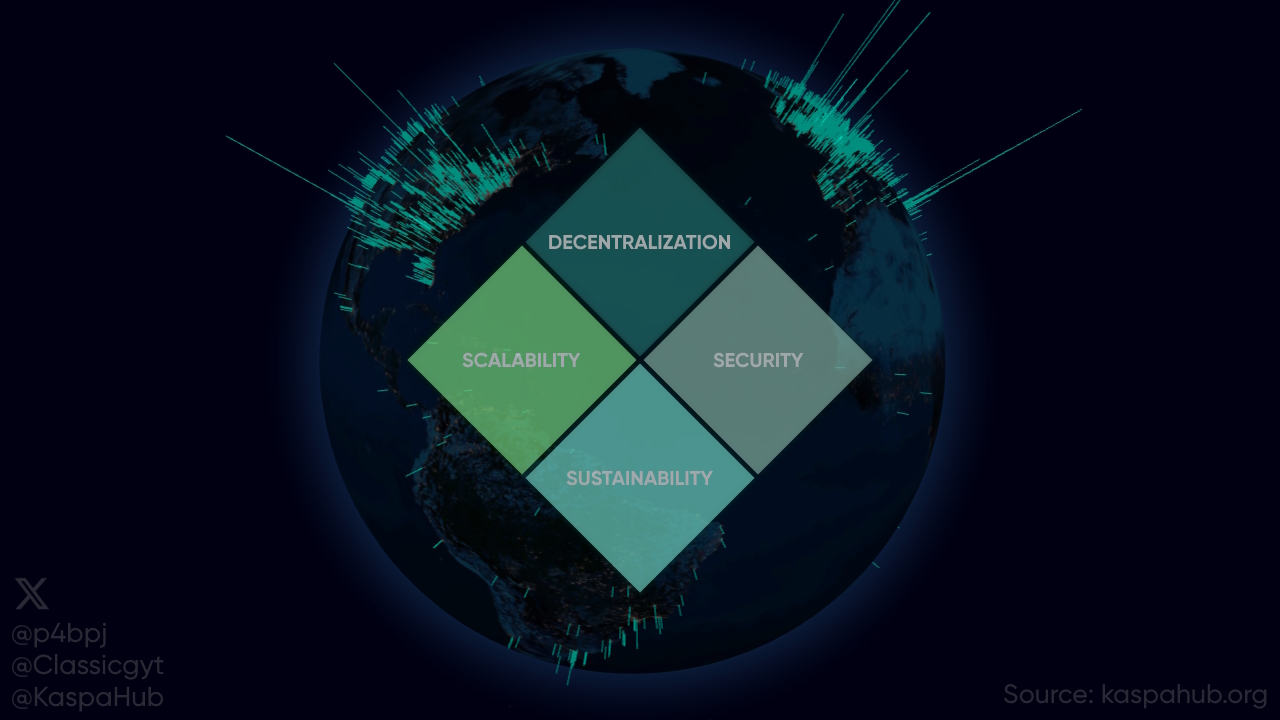
The blockchain quadrilemma refers to the profound challenge of achieving four critical aspects of blockchain technology simultaneously: security, scalability, decentralization, and sustainability. This concept suggests that optimizing one often compromises the others, making it exceedingly hard to achieve all four without significant trade-offs.
This expanded challenge builds upon the widely known blockchain trilemma, a concept first introduced by Ethereum co-founder Vitalik Buterin. The trilemma highlights the inherent difficulty in balancing security, scalability, and decentralization. While often seen as a zero-sum tradeoff, it’s important to remember that the original trilemma argued that achieving all three elements was hard, not impossible. Now, with sustainability added as a fourth, equally critical dimension, the complexity deepens. Sustainability has long been overlooked in discussions about blockchain design - frequently underprepared for and inadequately addressed. Yet as the ecosystem matures, sustainability can no longer remain an afterthought. It demands thoughtful integration alongside the original pillars, pushing the boundaries of innovation and responsible development.
Understanding the Blockchain's Essential Pillars
Let's break down what each of these four pillars means and why their harmonious coexistence is crucial for a truly robust and future-proof blockchain network.
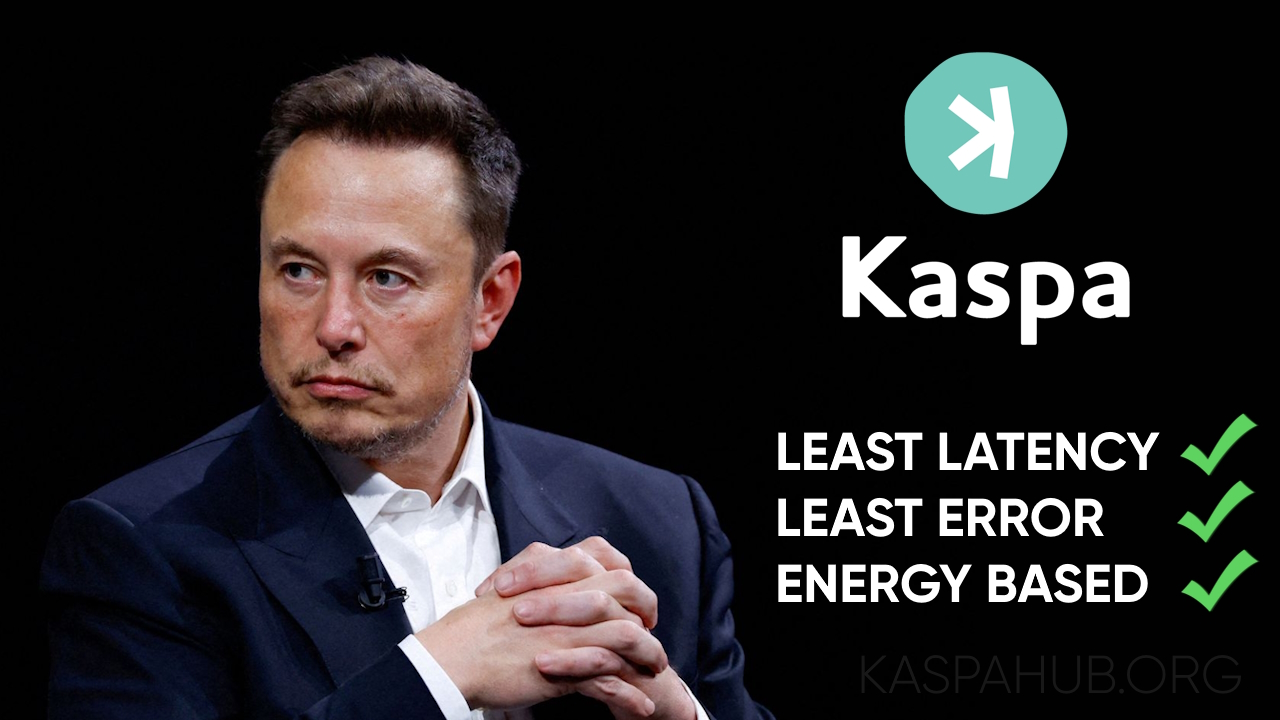
Cryptocurrencies were created to be native to the internet, yet most of them still behave like slow, mechanical systems that belong to an earlier era. Blocks queue up, confirmations take time, and users are taught to tolerate delay as a tradeoff for decentralization. But at their core, cryptocurrencies are information networks - systems for broadcasting, validating, and agreeing on state - and in any information network, latency is a flaw, not a virtue. As global coordination accelerates and real-time settlement becomes the baseline expectation, slow consensus becomes a structural weakness rather than a security feature.
Elon Musk, a man whose mind operates on the physics of minimizing travel time, perfectly articulated the core requirement for the future of currency in the digital age.
Kaspa stands out as a thoughtfully engineered cryptocurrency that builds directly on the proven strengths of Bitcoin while addressing one of its most persistent limitations. Launched as a pure proof-of-work system with no pre-mine or central control, Kaspa delivers the same core security and decentralization that Bitcoin pioneered—yet it does so with far greater efficiency and capacity at the base layer.
Bitcoin established the gold standard for decentralized digital cash through its simple, linear blockchain: blocks of transactions are added roughly every ten minutes in a single, unbroken chain. This design ensures remarkable security against attacks, as the network’s total computational effort protects the ledger. However, the linear structure creates a fundamental bottleneck. Only one block can extend the chain at a time. When demand grows, the network becomes congested, confirmations slow, and the system struggles to handle everyday transaction volumes without compromises.
Kaspa solves this challenge at the architectural level. Instead of forcing transactions into a single-file line, it uses a blockDAG—a web-like structure of blocks in which each new block can connect to multiple predecessors rather than just one. Think of it as a braided rope rather than a single thread: the ledger grows in parallel, with honest miners able to produce and reference blocks simultaneously. This approach eliminates the waste of “orphan” blocks that plague high-speed attempts on traditional chains, ensuring that nearly all computational work contributes to the network’s security.
Kaspa now processes a new block every 0.10 seconds. But how is that possible, and what does it mean for mining, security, and decentralization?
On May 5, 2025, around 15:00 UTC, Kaspa activated its Crescendo hardfork. Since then, the network has been producing 10 blocks per second-which means a new block every 100 milliseconds.
That’s faster than any other major cryptocurrency, and it’s not just for show.
How Can It Go That Fast and Still Be Secure?
Most proof-of-work networks slow things down to stay secure. If block times are too short, miners start producing competing blocks, and the network wastes energy rejecting them. That makes it easier for bad actors to disrupt the system.
Kaspa solves this by using a blockDAG distributed ledger technology, which lets blocks be created and confirmed in parallel-not just one at a time. That design allows the network to stay fast, while its consensus protocol (GHOSTDAG) ensures everyone still agrees on the order of events.
So even at 10 blocks per second, Kaspa remains secure and coordinated-without slowing down or centralizing.
What About Miners?
With 864,000 blocks produced daily, small miners have more chances to earn rewards-far more than on slower networks. Instead of fighting over a handful of blocks, more miners can win over time, which spreads rewards and keeps mining decentralized.
To avoid flooding the network with too many coins, Kaspa adjusted its reward system during the Crescendo upgrade. Block rewards were reduced to one-tenth of what they were before.
Different wallets, exchanges, and applications may recognize transactions as final at different points, based on their confirmation thresholds.
Kaspa is designed around extremely fast confirmation and settlement times. It features instant transaction visibility and typically achieves full probabilistic Time to Finality (TTF) in under 7 seconds, with some transactions finalizing in as little as 2 seconds. Most transactions are fully settled in under 5 seconds, meaning they are already spendable. These times can vary depending on network conditions and load.
Importantly, it takes about 7 seconds for Kaspa to reach the same honest-majority security that Bitcoin achieves after six blocks (commonly referred to as “6 confirmations”), representing a dramatic reduction in settlement time while preserving Nakamoto-style security assumptions.
As soon as a transaction is broadcast to the Kaspa network, it becomes visible immediately. This is largely enabled by Kaspa’s 100 millisecond block time (10 blocks per second), which ensures that new blocks - and the transactions inside them - are created and propagated across the network at extremely high frequency, eliminating the long waiting periods.
Why Kaspa Is So Fast
Kaspa currently produces 10 blocks per second using the PHANTOM GHOSTDAG protocol, a rate that has been live since the Crescendo hardfork on May 5, 2025. Because blocks are created every 100 milliseconds and processed in parallel, confirmations accumulate extremely quickly, pushing transactions toward near-instant settlement.
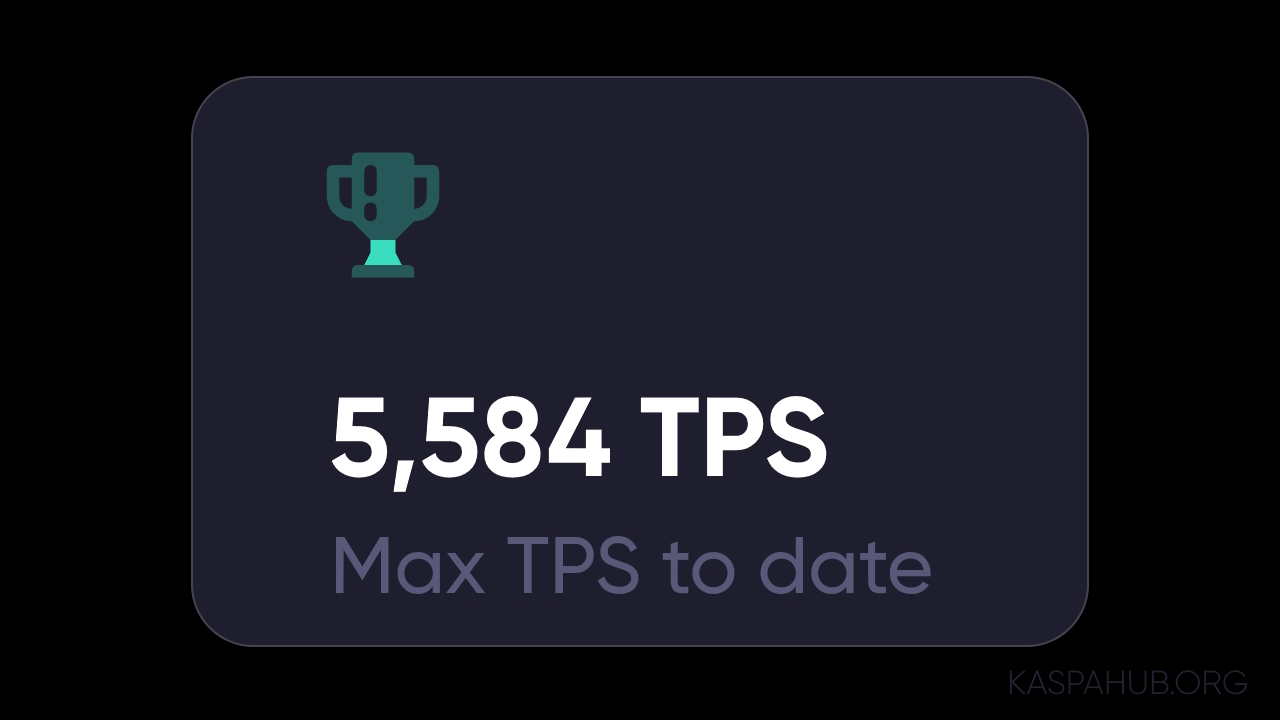
Theoretically, once Kaspa’s 100 blocks per second upgrade goes live on mainnet, it will be able to process, as a minimum, 30,000 transactions per second. This estimate is based on current block capacity, where a single block can hold over 300 transactions, and conservative network assumptions. In practice, under current network parameters at 10 blocks per second, Kaspa is already capable of processing more than 5,000 transactions per second, which supports the conservative nature of the 30,000 TPS minimum projection at 100 blocks per second. While throughput could be increased further by allowing larger blocks, there are currently no plans to do so, as it is unnecessary at the present level of adoption. Kaspa’s developers deliberately avoid increasing block size, as larger blocks are well known to degrade decentralization and network security.
As of today, Kaspa already operates at a level that no other Proof of Work network has ever reached. Since the Crescendo hardfork, which occurred on May 5, 2025, Kaspa has been running at 10 blocks per second. Even at this stage, the network has repeatedly demonstrated performance that rivals and exceeds many leading Proof of Stake chains.
Understanding TPS in Kaspa
TPS, or transactions per second, measures how many transactions a network can include and process over time. In traditional blockchains like Bitcoin, TPS is constrained by long block intervals and a linear chain structure where only one block can be added at a time. Kaspa fundamentally changes this model.
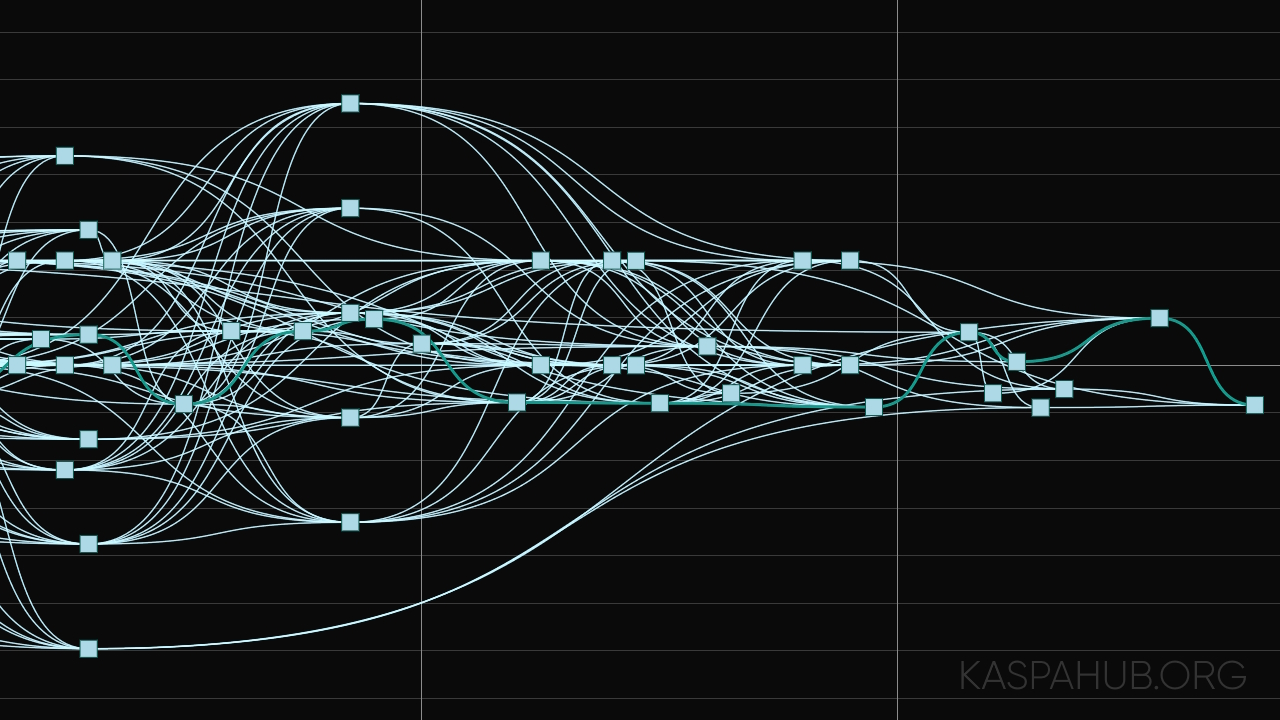
Kaspa transaction speed delivers instant visibility on the network, enabling real-time interactions with external events in a fully decentralized manner. Unlike traditional blockchains limited by sequential processing and slow block intervals, Kaspa operates at 10 blocks per second with a high-performance architecture powered by proof-of-work, allowing parallel block creation and rapid sampling of the honest majority to achieve transaction propagation, confirmation, and practical finality in seconds.
Block Time
Kaspa’s current block time of approximately 0.1 seconds, or 100 milliseconds, is among the fastest for major Layer 1 cryptocurrencies. This ultra-short block interval dramatically reduces confirmation latency, allowing transactions to be included almost instantly.
Because blocks are produced so frequently, the network experiences smooth transaction flow and minimal mempool buildup. Even during periods of high activity, transactions continue to move quickly, keeping fees extremely low and predictable.
Time to Finality

Kaspa has already demonstrated that Bitcoin’s core principles—proof-of-work security, decentralization, and a simple unspent transaction output model—can scale dramatically through its innovative blockDAG architecture. The upcoming Toccata hard fork, scheduled for mainnet activation in June, represents the next deliberate step in this evolution. This planned protocol upgrade introduces native programmability directly at the base layer, enabling more sophisticated uses without compromising the network’s speed, security, or predictability.
A hard fork in Kaspa’s context is a coordinated upgrade to the network’s rules. All nodes and miners must adopt the new software for the chain to continue seamlessly. Toccata follows a careful process of testing and validation to ensure stability, much like Bitcoin’s emphasis on reliable, battle-tested rules.
At its heart, Toccata solves a clear limitation. Kaspa’s blockDAG already allows blocks to be produced in parallel, delivering fast confirmations and high throughput while maintaining Bitcoin-level security guarantees through GHOSTDAG consensus. Yet the base layer previously offered limited tools for transactions that carry forward instructions or coordinate across multiple steps. Everyday payments worked exceptionally well, but developers, merchants, and institutions seeking conditional flows or verifiable asset tracking had fewer built-in options.
Block Time
Block time is the average duration required to append a new block to the ledger. Shorter block times allow for faster transaction confirmations, enhancing the user experience for payments and applications. Cryptocurrencies vary in their approach, with some achieving sub-second block times for speed, while others opt for slower block times and larger block sizes to improve throughput, which can introduce potential security and performance issues.
Max TPS
Maximum Transactions Per Second (TPS) measures a network’s capacity to process transactions. High TPS is critical for scalability, supporting widespread adoption and real-time applications like payments or DeFi. Traditional blockchains often face bottlenecks due to linear block processing, whereas advanced structures like BlockDAGs or layer-2 solutions can handle thousands of TPS, enabling efficient, high-throughput ecosystems. Most TPS data sourced from Chainspect.
Transaction Fees
Transaction fees are costs users pay to process transactions, serving to prevent spam by discouraging frivolous activity and to incentivize miners, stakers or node runners to validate and secure the network. Low fees enhance accessibility for microtransactions, especially in high-throughput systems. Fee structures vary by network design, consensus type, and demand, with some offering near-zero costs through optimized processing, while others face higher fees due to computational demands or market-driven pricing.
Consensus Mechanisms
Consensus mechanisms determine how a network validates transactions. Proof of Work (PoW) uses computational power to ensure robust security through decentralized mining. Proof of Stake (PoS) relies on staked assets to select validators, which may concentrate control among large stakeholders. Both mechanisms balance security, speed, and decentralization with distinct trade-offs.
Distributed Ledger Technology (DLT)
Distributed Ledger Technology (DLT) defines the structure of a cryptocurrency’s ledger. Traditional blockchains process transactions sequentially, limiting throughput. Advanced DLTs, like BlockDAGs or Block-Lattices, allow parallel transaction processing, significantly boosting scalability while maintaining security. The choice of DLT impacts a network’s ability to handle high transaction volumes and adapt to diverse use cases.
Security
Security in cryptocurrencies ensures resistance to attacks like double-spending, 51% attacks and spam. High security often stems from decentralized mining (PoW) or robust validator networks (PoS). However, trade-offs exist: highly centralized systems may sacrifice security for speed, while computationally intensive systems prioritize integrity over efficiency. Advanced designs mitigate these risks through innovative structures like GHOSTDAG.